How to flip cars, and where to find cars to flip
Car flipping is buying a used car for less than it's worth and selling it for more. You buy from a private seller, fix what's cheap to fix, put the title in your name and resell. Buying cars to resell is what dealer licenses are for, so check your state's rules before the first one. This guide covers each step, with numbers from the 120,000 car listings Carbeam reads every day.
 Updated · 17 min read
What car flipping is
Flipping a car means buying it to sell again soon, at a profit. You don't buy it to drive it.
The profit comes from one of three things:
- The seller priced it low. They need the money this week, or they don't know what the car is worth, or they just want it out of the driveway.
- It needs work you can do cheaply. A car that won't start sells for far less than the same car running. Sometimes the fix is a battery or a starter.
- It looks worse than it is. It's dirty, the photos are dark, and the description is two lines long. Cleaned up and photographed properly, it sells for more.
Most flips are a mix of the three. For most people it's a side income: one car at a time, on weekends. Even that can need a dealer license, and turning it into a car flipping business always does: see is flipping cars legal.
One thing you should know about us. We don't flip cars ourselves. Carbeam is a tool that reads new car listings on Facebook Marketplace and Craigslist and alerts people when one matches what they want, and many of those people are flippers. So we can't tell you war stories. What we have is the listings: how fast the cheap cars go, how many need work, when they get posted. The sections on inspecting and selling a car are general advice rather than our data; the numbers everywhere else come from those listings.
About the data. The numbers here come from millions of car listings posted on Facebook Marketplace and Craigslist in November 2026. Our AI reads each listing's text and photos to tell dealers from private sellers and to work out the title and the car's condition.
How much money can you make flipping cars?
It comes down to three numbers: what you pay, what you spend, and what you sell for. Beginners usually get the middle one wrong. They count the parts and forget the sales tax, the title fee and the tow. And the profit is only real if the car sells at that price: every week it sits, you pay for insurance and somewhere to keep it.
Real examples
Two cars from Facebook Marketplace in November 2026 found by Carbeam, each with one fault the seller named. We estimated the parts costs, then used our listing data to find the median asking price of similar running vehicles: the middle price, with half of them listed for more and half for less.
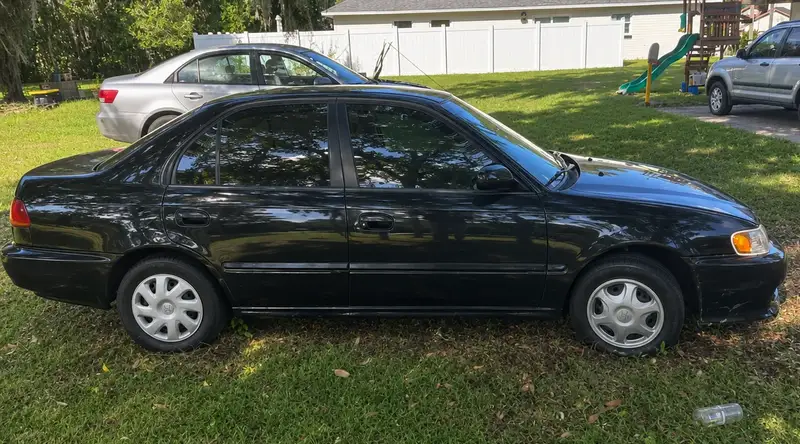
2002 Toyota Corolla LE
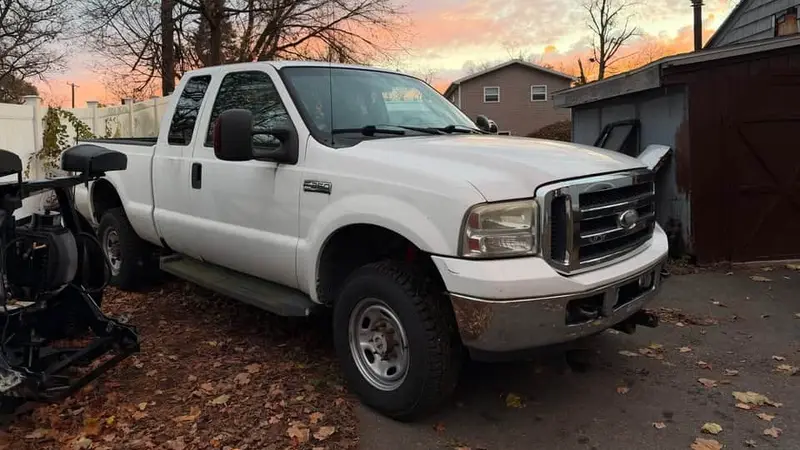
2006 Ford F-350 Lariat
The truck is the bigger win: about $3,200 for a few hours' work, against about $700 for the Corolla. Trucks hold their value, so a cheap fault takes thousands off the price. But it took $5,000 up front, and it was sold in just three days after it was listed.
Part prices are from Walmart, Advance Auto Parts and other parts sellers. Resale prices are median asking prices of comparable running vehicles.
How much cheaper are cars that need repairs?
Most of the profit in flipping is the gap between a car that needs work and the same car running. We compared the two on private-seller listings: the same model, the same model year and a similar mileage. Across every model we could match, the typical car that needs mechanical repairs or doesn't run is listed for 45% less than the same car running: about $1,850 less. Here are the ten models with the most listings that need work:
| Model | Runs | Needs work | Cheaper by |
|---|---|---|---|
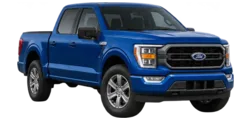 Ford F-150 | $6,160 | $3,58042% off | $2,580 |
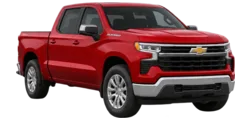 Chevrolet Silverado 1500 | $7,260 | $4,22042% off | $3,040 |
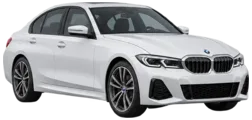 BMW 3 Series | $4,840 | $2,96039% off | $1,880 |
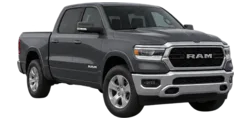 Dodge Ram 1500 | $4,490 | $2,53044% off | $1,960 |
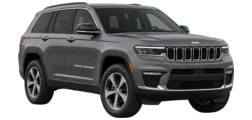 Jeep Grand Cherokee | $4,440 | $2,62041% off | $1,820 |
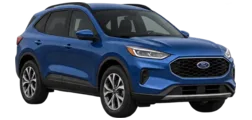 Ford Escape | $4,370 | $2,24049% off | $2,130 |
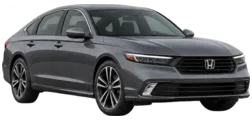 Honda Accord | $3,430 | $2,11038% off | $1,320 |
 Toyota Camry | $3,520 | $1,94045% off | $1,580 |
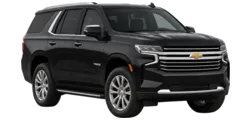 Chevrolet Tahoe | $4,650 | $2,95037% off | $1,700 |
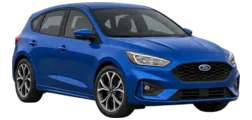 Ford Focus | $3,330 | $1,74048% off | $1,590 |
Both prices are median asking prices on Facebook Marketplace and Craigslist in 2026, taken within each model year and mileage band and then averaged, so the two columns have the same mix of years and miles. Cars with body damage or a salvage or rebuilt title are left out of both, so the difference is only about whether the car runs. Two things to keep in mind. These are asking prices, and cars tend to sell for less than that. And "needs mechanical repairs" can mean a $40 sensor or a dead engine, so the difference is the room you have for parts and profit together, not the profit.
Trucks have the largest dollar gap. Lower-priced models like the Escape and Focus have the largest percentage gap. It's smallest on cars people buy for fun: a Wrangler or a Charger that needs work still lists for only about a third less, probably because their buyers expect to work on them anyway.
The best cars to flip for profit
The cars that flip well are boring. You want a car that lots of people are looking for, with cheap parts, that any buyer can understand. Our data shows which ones those are. Among private-seller cars listed for under $10,000 on Marketplace, these went fastest:
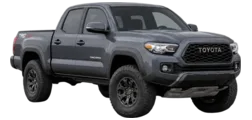 Toyota Tacoma
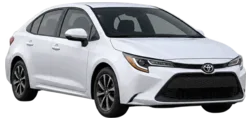 Toyota CorollaToyota Camry
 Honda Civic
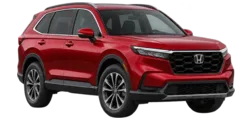 Honda CR-VHonda Accord
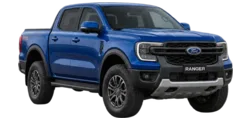 Ford Ranger
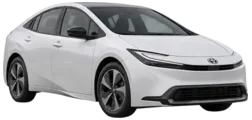 Toyota Prius
Toyotas and Hondas fill the list, with the Ford Ranger. At the other end are the Ford Mustang, BMW 3 Series, BMW 5 Series, Ford Expedition and Jeep Wrangler, at 25% to 27%. Median asking prices for these models range from about $3,000 to $6,500. A cheap BMW is cheap for a reason, and its buyers know it.
What else to look for:
- Cheap ones. 29% of car listings on Marketplace are priced under $5,000. That's where a few hundred dollars of work changes the price the most. It's also an amount most people can afford to get wrong once.
- Clean titles, at first. 4.6% of Marketplace listings have a rebuilt or salvage title. They cost less to buy, but they also sell for less and take longer. Learn on clean titles.
- A problem you understand. 9.4% of Marketplace listings say the car needs mechanical work or doesn't run. Those are the flipper's listings. But only make an offer if you know what the fix costs.
Cars that need work sell more slowly, a little on Marketplace and a lot on Craigslist. Fewer buyers want a car they have to fix. For a flipper, that means less competition for exactly the cars that have the most room in the price.
What to stay away from: rust in the frame, flood damage, a seller whose name isn't on the title, and luxury cars with low prices and expensive parts.
Where to find cars to flip
Most flippers buy from private sellers online, because that's where the underpriced cars are. A dealer knows what a car is worth. A private seller often doesn't, or doesn't care.
| Good for | Watch out for | |
|---|---|---|
| Facebook Marketplace | The most listings by far, and the most underpriced ones | Dealers you can't filter out, and thin descriptions |
| Craigslist | Fuller listings: the VIN and title status are usually there | Fewer cars, and most are from dealers |
| OfferUp | Another place private sellers list, and some listings come with a free history report | Dealer listings mixed in with private ones |
| Impound and government auctions | Low prices, and anyone can bid | You often can't start the car, and there are buyer fees |
| Dealer and salvage auctions | Lots of cars, once you have a license | Dealer auctions are closed to the public, and many salvage lots need a license or a broker |
| Offline: driveways, mechanics, tow yards | Nobody else is bidding | It's slow, and you can't search it |
Facebook Marketplace
This is the biggest source. We see about 110,000 new car listings there every day. The problem is sorting them. 40% are from dealers, and Facebook has no filter to hide those. 40% don't mention the title at all, and only 14% include the VIN. Expect to ask a lot of questions.
Marketplace also only searches around one location. If you'd travel for the right car, see how to search Facebook Marketplace nationwide.
Craigslist
Craigslist is much smaller, about 12,000 new car postings a day. But the postings are more complete: more than half include the VIN, and almost all state the title status. There are more dealers, 65% of postings, though Craigslist lets you filter them out.
It's strongest on the West Coast. California alone has 22% of the country's Craigslist car postings. Each city has its own site, so here's how to search all of Craigslist at once.
OfferUp
OfferUp has a car section too, and in some cities it's busy enough to check. Some of its car listings come with a free Carfax or VinAudit history report, which saves you buying one. Dealers list there as well, so check who's selling before you message.
Auctions
Can you make money selling cars from auctions? Yes, but it's harder than it looks, and it's a bad place to start.
The big dealer auctions, such as Manheim and ADESA, are closed to the public. Most dealer auctions require a dealer license and registration with AuctionACCESS, which verifies buyers’ credentials. Salvage auctions such as Copart and IAAI let the public bid on some cars but not others. Access depends on the state and the car’s title status. Some vehicles are restricted to licensed buyers. A broker can bid on the rest for you, for a fee. Police impound, tow yard and government surplus auctions are open to anyone.
The catch is the same everywhere. You usually can't drive the car before you bid, and often you can't start it. There are buyer fees on top of the price. And the other bidders do this every week.
Offline
A car that has sat in a driveway for a year with a flat tire. A note on a supermarket board. A mechanic who knows whose car has been waiting for parts since spring. This is slow, but when you find one, you're the only buyer.
How to get to a good car first
Everyone knows where to look. The hard part is being first.
Of the private-seller cars under $5,000 that we followed on Marketplace, 36% were sold or taken down within three days. On Craigslist, 14% were gone within 24 hours. The cheaper the car, the faster it goes:
The two sites follow the same curve: a car under $5,000 is three to four times as likely to be gone in three days as one over $20,000.
Sellers of cheap cars get a lot of messages, and many deal with the first person who can come with cash. Three things help you be that person.
Check during the busiest posting hours
Six in ten Marketplace listings go up between 9 am and 5 pm Central. Fewer than one in ten are posted before 8 am. If you only check in the evening, you're looking at cars other people have been messaging about all day.
Turn on the free alerts
Both sites can notify you about a saved search, and both are free. Here's how to set up Facebook Marketplace alerts and Craigslist alerts.
These alerts cover one area and rely on the details sellers enter in the listing form, so you can't ask for "private sellers only" on Marketplace, or "doesn't run" on either site.
Get alerts for cars that match your criteria
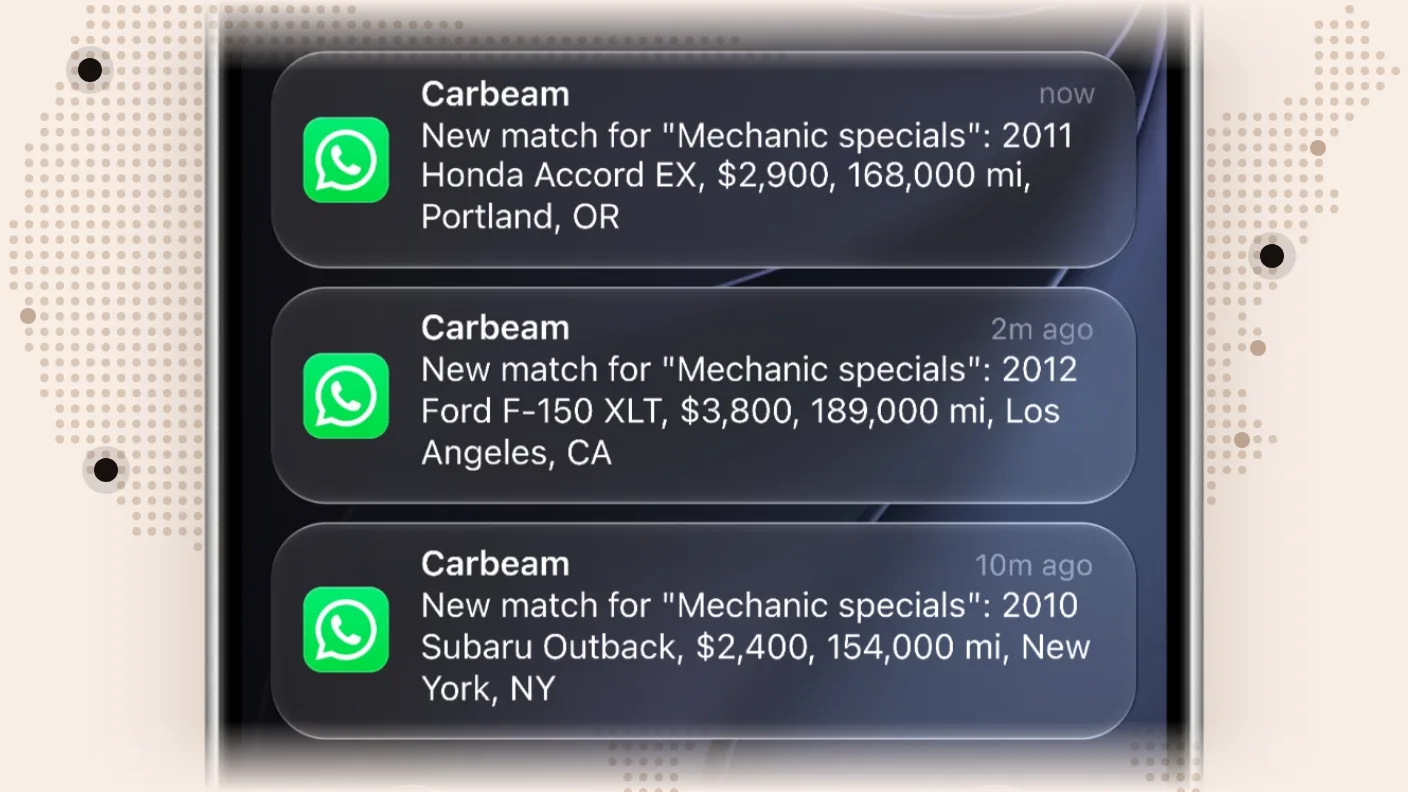
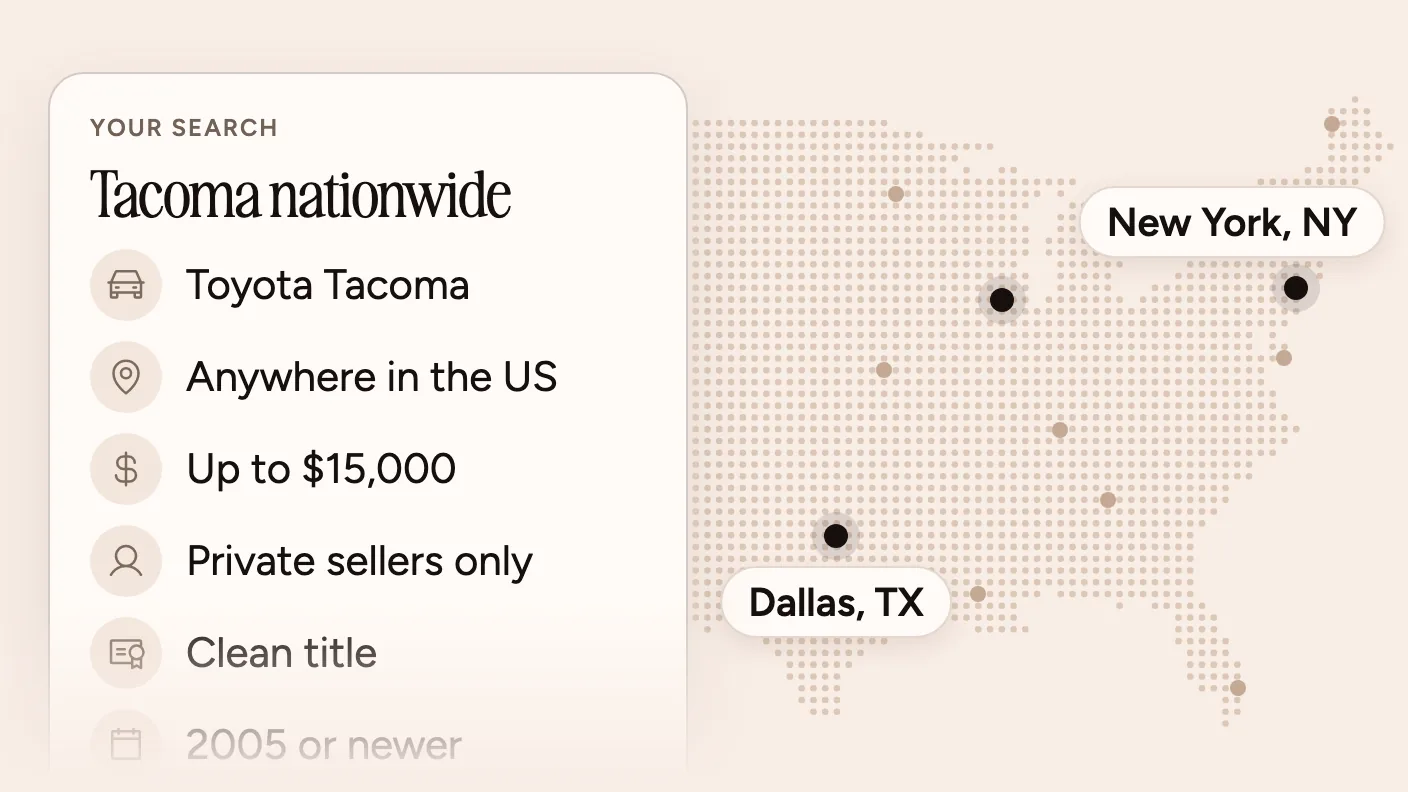
This is what Carbeam does, so take this part as a pitch. You describe the car: the make, the price, private sellers only, "needs work or doesn't run", and an area from one town to the whole US. Carbeam reads every new listing on both sites, the description and photos included, and sends you an email or WhatsApp message when one fits. The median delay is about 4 minutes on Marketplace and 2 on Craigslist.
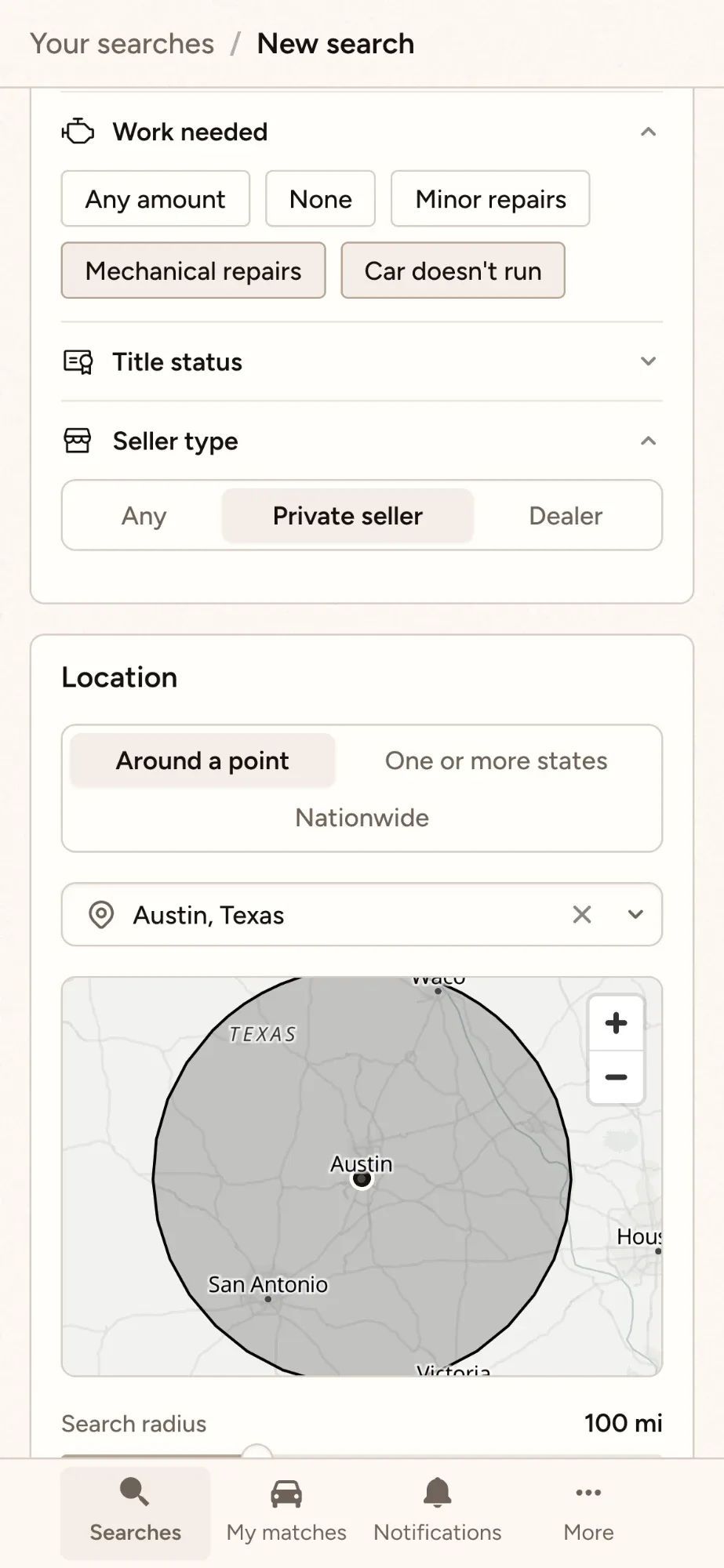
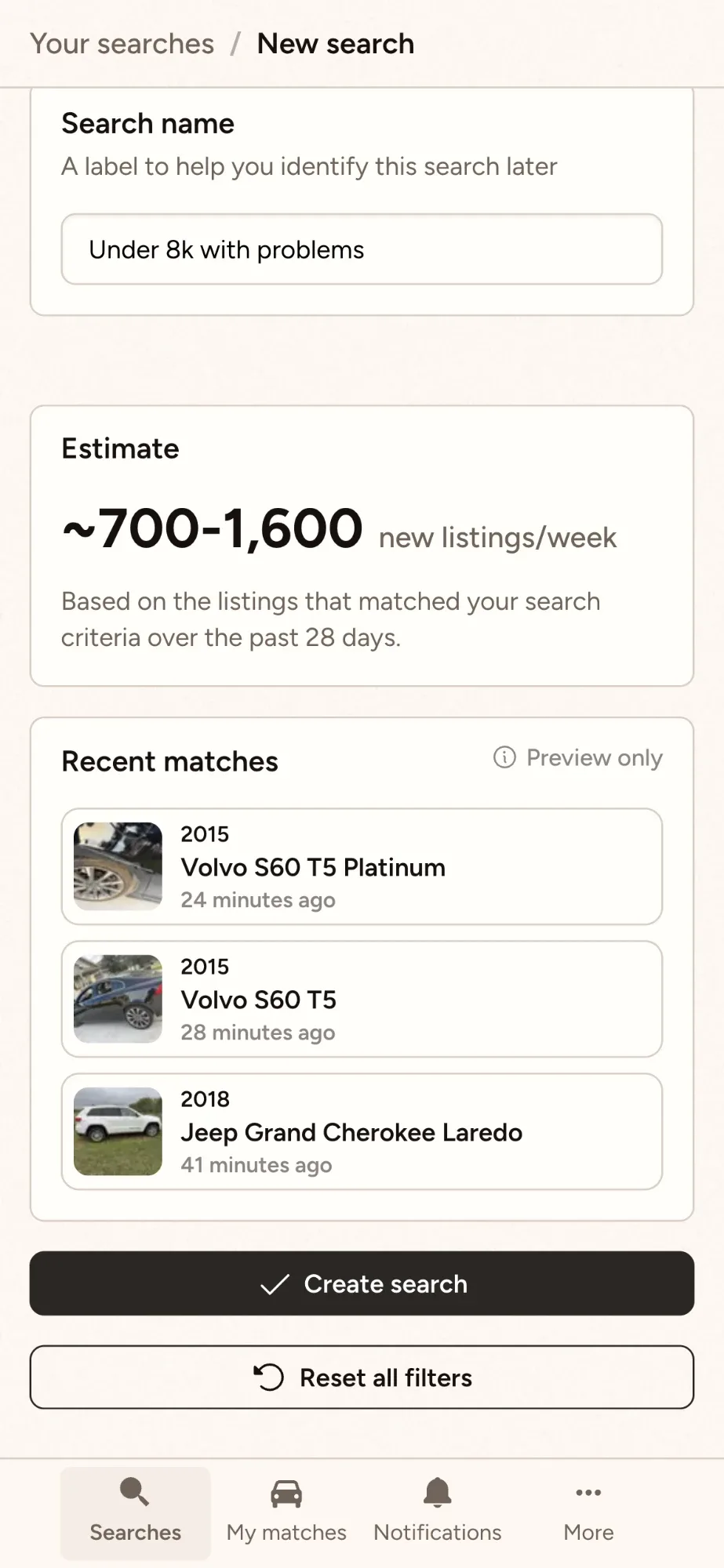
Searching for cars that need repairs or have a salvage title is on the Pro plan, $59 a month. There's a 7-day free trial with everything in it, and it doesn't ask for a card.
Inspecting the car and making an offer
Skipping these steps is how most people lose money on a flip.
- 1Ask before you drive outGet the VIN and run a history report. Ask whose name is on the title and whether there's a loan on the car. Ask what's wrong with it, and let the seller describe it in their own words. Check the mileage is normal for the car's age with our mileage checker.
- 2Bring a few toolsA code reader (cars sold in the US have an OBD-II port from the 1996 model year on, or 1997 for diesels), a flashlight, a jump pack and gloves.
- 3Check the paperwork firstThe name on the title should match the seller's ID. If it doesn't, or the title is missing, walk away.
- 4Then check the carStart it cold if you can. Look at the oil and the coolant. Look underneath for rust and leaks. Read the codes. Drive it if it runs.
- 5Set your maximum offer before you visitTake what the car will sell for, subtract everything you'll spend, and subtract the profit you want. That's the most you can pay. Bring cash, and get a bill of sale and the signed title.
Waiting can work too. 11% of Marketplace listings drop their price within a week, by 5.9% at the median, and the typical first cut comes about 3 days after posting. If a car is close to your maximum offer, save it and look again in a few days. Just don't expect the best ones to still be there.
Selling the car
When you resell, make the listing clear and complete: bright photos, useful details, and an honest description.
- Fix safety and mechanical problems first. Brakes, tires, leaks and warning lights: anything that makes the car unsafe or shows up on a test drive. Then the small things a buyer notices, like a dead window switch or a torn wiper, and clean the car properly, inside and out.
- Take the photos in daylight. Every side, the interior, the odometer, the engine bay, and any damage.
- Say what you fixed and what's still wrong. A buyer who finds a surprise in person walks away. One who read about it in the listing has already accepted it.
- Price it against what's listed near you. Same model, similar year and mileage. If you want it gone this week, go a little under.
- Close the sale properly. Meet somewhere public. Take cash, or a cashier's check that you verify at the buyer's bank. Write a bill of sale and sign the title over. If your state has a notice of sale form, file it the same day.
Is flipping cars legal?
It can be, but buying cars to resell is exactly what dealer licenses are for, so a private person can only do a little of it. Three rules matter, and the first one catches most beginners.
1. You can only sell a few cars a year without a dealer license
Most states set a number of cars a private person can sell in a year. Go over it and the state treats you as an unlicensed dealer, which means fines. Of the 41 states that set a number, 27 allow four or five cars. The strictest allow two, and Indiana and Vermont allow eleven. The other nine, California among them, set no number at all. There you need a license as soon as you're in the business of selling cars, however few you sell.
The number isn't a permit to flip that many cars, though. It's the point where the state stops asking and assumes you're a dealer. Below it, states can still look at why you bought the car, and if you bought it to resell, some count you as a dealer at any number. Maine says so outright, and Mississippi only exempts cars you bought and used yourself. So the number in the table is a ceiling, not a safe zone: before your first flip, ask your state's DMV whether buying a car to resell needs a license there.
| State | Most cars you can sell | Law or source |
|---|---|---|
| Alabama | 4 a calendar yearCounting only cars that weren't titled in your name | Ala. Dept. of Revenue, § 40-12-390 |
| Alaska | 4 in any 12 months | AS 08.66.350 |
| Arizona | 6 in any 12 months | A.R.S. § 28-4301 |
| Arkansas | 4 a calendar year | Ark. Code § 23-112-602 |
| California | No set numberOnly cars you bought for your own use are exempt | Cal. Veh. Code §§ 285, 286 |
| Colorado | 2 a calendar year | C.R.S. § 44-20-102 |
| Connecticut | No set number | Conn. Gen. Stat. § 14-51 |
| Delaware | 4 in any 12 months | 21 Del. C. § 6301 |
| Florida | 2 in any 12 months | Fla. Stat. § 320.27 |
| Georgia | 4 a calendar year | O.C.G.A. § 43-47-2 |
| Hawaii | 2 a calendar year | HRS § 437-1.1 |
| Idaho | 4 a calendar year | Idaho DMV |
| Illinois | 4 a year | 625 ILCS 5/5-102 |
| Indiana | 11 in any 12 months | IC 9-32-2-9.6 |
| Iowa | 6 in any 12 months | Iowa Code ch. 322, Iowa DOT |
| Kansas | 4 a calendar yearBuying a car to sell for a profit can count on its own | K.A.R. 92-50-42, Kansas DOR |
| Kentucky | No set number | KRS 190.010 |
| Louisiana | 4 in any 12 monthsNot counting cars registered to and insured by your household | La. R.S. 32:781 |
| Maine | 5 in any 12 monthsBuying a car to resell makes you a dealer at any number | 29-A M.R.S. § 951 |
| Maryland | 2 in any 12 monthsOffering three or more counts as buying to resell | Md. Transp. § 15-101 |
| Massachusetts | 3 a year | Mass.gov |
| Michigan | 4 in any 12 months | MCL 257.248 |
| Minnesota | 5 in any 12 months | Minn. Stat. § 168.27 |
| Mississippi | No set numberOnly cars you bought and used yourself are exempt | Miss. Code § 27-19-303 |
| Missouri | 5 a calendar year | RSMo § 301.570 |
| Montana | No set numberCovers selling cars that aren't registered in your name | MCA § 61-1-101 |
| Nebraska | 8 in any 12 months | Neb. Rev. Stat. § 60-1401.07 |
| Nevada | 3 in any 12 monthsCars you owned personally | NRS 482.020 |
| New Hampshire | 4 in any 12 months | RSA 261:103-b, NH DMV |
| New Jersey | No set number | N.J.A.C. 13:21-15.1 |
| New Mexico | 4 a yearYour own cars | NMSA § 66-1-4.4, NM MVD |
| New York | 5 a calendar year | N.Y. VTL § 415 |
| North Carolina | 4 in any 12 months | N.C.G.S. § 20-286 |
| North Dakota | No set number | N.D.C.C. ch. 39-22 |
| Ohio | 5 in any 12 months | O.R.C. § 4517.02 |
| Oklahoma | No set numberSelling for a profit makes you a dealer, even once | 47 O.S. § 581 |
| Oregon | 5 a calendar yearAbove that, you have to prove they were for personal use | ORS 822.005 |
| Pennsylvania | No set number | 63 P.S. § 818.102 |
| Rhode Island | 4 a calendar year | R.I. Gen. Laws § 31-5-5 |
| South Carolina | 5 a calendar year | S.C. Code § 56-15-10 |
| South Dakota | 4 in any 12 months | SDCL 32-6B, SD DOR |
| Tennessee | 5 in any 12 monthsTitled in your name | Tenn. Comp. R. & Regs. 0960-01-.20 |
| Texas | 4 a calendar yearOwned and registered in your name | Tex. Transp. Code § 503.024 |
| Utah | 2 in any 12 months | Utah Code § 41-3-102 |
| Vermont | 11 a year | 23 V.S.A. § 4 |
| Virginia | 4 in any 12 months | Va. Code § 46.2-1500 |
| Washington | 4 in any 12 months | RCW 46.70.021 |
| West Virginia | 9 in any 12 months | W. Va. C.S.R. § 91-6-11 |
| Wisconsin | 5 in any 12 monthsTitled to you | Wis. Admin. Code Trans 138.025 |
| Wyoming | 2 in any 12 months | WYDOT |
We checked each state's law or motor vehicle agency in November 2026. Laws change, and this isn't legal advice, so check with your state's DMV before you buy a second car. Answers on forums are often out of date: the "five a year" you'll read for California, for one, isn't in its law.
Selling over the limit is called curbstoning
Curbstoning is dealing in cars without a dealer license while posing as a private seller. The name comes from selling cars at the curb instead of from a lot. States go after it because curbstoners often hide what's wrong with a car, skip the title transfer and the sales tax, and leave the buyer without the protections a licensed dealer's sale comes with.
A flipper doesn't have to be dishonest to be counted as one. Selling more cars than your state allows is enough, even if you describe every car truthfully, and in some states so is buying cars to resell at all. Either way, the way to keep flipping is to get licensed.
2. The car has to be in your name before you sell it
Selling a car that you never titled in your own name is called title jumping. You'll also hear "title skipping" or "floating the title". People do it to skip the sales tax and the fees. It's illegal in every state, and it can leave your buyer with a title they can't register.
So every flip includes a trip to the DMV. In most states that means paying sales tax on what you paid for the car, plus the title and registration fees. Include it when you calculate your costs. It's also the main reason people who flip more than a few cars a year get a dealer license. A licensed dealer can buy a car for resale without paying sales tax on it, as long as it's held only for resale, and the tax is collected from the buyer when it's sold.
3. The profit is taxable
In the US, the money you make flipping cars is income, and it goes on your tax return. If you flip regularly, it counts as a business. That has an upside: you can deduct what you spent on parts, fees and towing.
Keep every receipt and a simple spreadsheet, starting with the first car. We aren't accountants, so ask one how this works for you.
What goes wrong
- The fix costs more than you guessed. The car that "just needs a battery" often needs more than a battery. Most sellers aren't mechanics, so treat what the listing says is wrong as a guess until you've checked it yourself.
- The title has a problem. A loan that was never paid off, a missing title, a name that doesn't match. These can take months to sort out, or never get sorted.
- The car doesn't sell. You priced it on hope. Every week costs you, and the price only goes down.
- You run into your state's dealer rules. You sell more cars than it allows, or it counts buying to resell as dealing however few you sell. Then you either stop or get a license.
- You forget your own time. Two weekends of work for $400 is fine as a hobby. As a business it isn't.
How to start flipping cars
If this is your first flip, here's the order to do it in:
- 1Check your state's dealer rulesFind your state in the table above. Its number is the most you can sell before you count as a dealer, not a permit to flip that many, so ask your DMV whether buying a car to resell needs a license where you live.
- 2Set a budget for the whole flipThe car, plus the sales tax, the title fee, a tow and the parts. Keep some money back for the fault you didn't see.
- 3Pick one or two modelsStart with ones from the list above that you can learn to fix. Once you know a model well, you know what it sells for and what usually breaks.
- 4Set up your searchesTurn on the free alerts on Marketplace and Craigslist, and check when the listings go up. The first person to message the seller often gets the car.
- 5Decide your top price before you see the carStart with a realistic resale estimate, then subtract your costs and target profit to find your maximum purchase price. Don't go over it once you're there.